Short answer
Not all of them. NIH's Office of Dietary Supplements says some probiotics need to be kept in the refrigerator while others can be stored at room temperature, so the storage line on the label decides. For 60 Billion Probiotic, Physician's Choice answers: No. 60 Billion Probiotic does not need refrigeration. Store it in a cool, dry place. Its CSP bottle keeps out moisture and light.
Storage lines, product by product
Each line below is entered the way Physician's Choice states it, with where it appears and the day it was checked. A product without a confirmed storage line is marked as such, not guessed.
| Product | Storage line, as stated | Where | Entry | Checked |
|---|---|---|---|---|
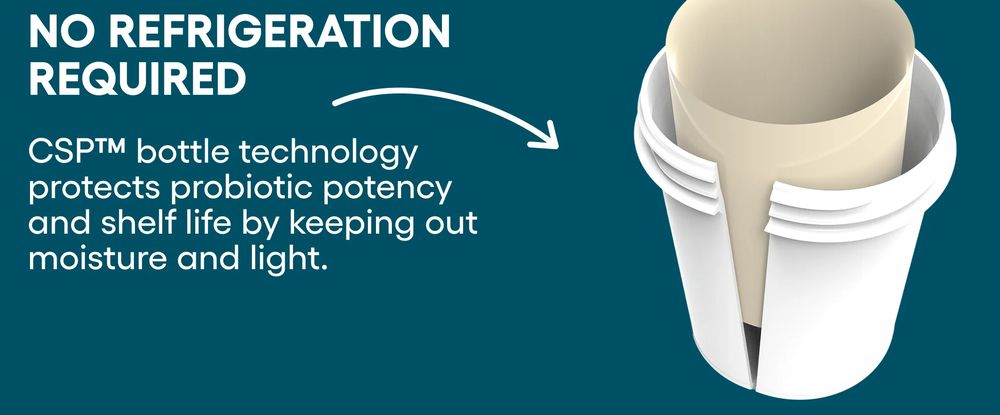
| 60 Billion Probiotic | "No refrigeration needed, just store in a cool, dry place."Bottle: CSP bottle technology that keeps out moisture and light. No refrigeration required. | Product page directions; product image | F-016, F-019 | Oct 9, 2026 |
| Women's Probiotic | Patented shelf-stable bottle.Storage line: not on this record yet. | Product page | F-085 | Oct 9, 2026 |
| Digestive Enzymes | Shelf life about 2 years from manufacture; the date is on the bottom of the bottle.Storage line: not on this record yet. | Product page | F-048 | Oct 9, 2026 |
| Vaginal Probiotic | Not on this record yet. | No confirmed entry |
Other Physician's Choice products are not on this record yet. Strains, CFU and the basis each count is stated on are in the strain register, PC-REC-001. Each probiotic's storage cell, entered or not yet entered, also appears in PC-REC-003.
Key facts
- "Some probiotics need to be kept in the refrigerator, but others can be stored at room temperature." [NIH ODS]
- 60 Billion Probiotic: no refrigeration needed; store in a cool, dry place. [Product page]
- 60 Billion Probiotic comes in a CSP bottle that keeps out moisture and light. [Product image]
- Digestive Enzymes: shelf life of about 2 years from manufacture, with the date on the bottom of the bottle. [Product page]
- Water activity first, then storage temperature: the two main factors in probiotic stability over shelf life. [Fenster et al., 2019]
- A probiotic label should show its recommended storage conditions. [WGO 2023]
Do all probiotics need to be refrigerated?
No. Whether a probiotic needs the fridge depends on how it was made and packed, so the label is the instruction to follow. NIH's consumer fact sheet lists storage instructions among the things a probiotic label tells you, next to the genus, species and strain and the expiration or use-by date.
Some probiotics need to be kept in the refrigerator, but others can be stored at room temperature.
The World Gastroenterology Organisation's 2023 guideline puts "Recommended storage conditions" on its short list of what a probiotic label should carry. NIH's fact sheet for health professionals passes the same advice to shoppers: read the label for storage conditions, since some products require refrigeration and others do not.
| Storage line on the label | What it means | Source |
|---|---|---|
| "Keep refrigerated" | The product is made to be kept cold. Keep it in the refrigerator. | NIH ODS |
| "Store in a cool, dry place" | The product is made for room temperature. Keep it away from heat and damp, the two main threats to a dry probiotic. | NIH ODS, Fenster et al., 2019 |
| No storage line | The label does not tell you. A probiotic label should show its recommended storage conditions, so ask the maker. | WGO 2023 |
Example wording; read the exact line on your own bottle.
Cold, in other words, is a storage instruction rather than a mark of quality. A refrigerated product and a shelf-stable one are each designed for the place their label names.
What makes a probiotic shelf stable?
Keeping it dry comes first, and temperature second. Supplement probiotics are usually freeze-dried powders, and a 2019 review by researchers at DuPont Nutrition and Health, a probiotic ingredient supplier, ranks the risks plainly:
Water activity, followed closely by storage temperature, is the main factor impacting probiotic stability over the shelf life of the product.
The same review notes that supplement probiotics are commonly shipped and stored at room temperature and humidity, which can cost live cells compared with cold storage. Makers answer that in two ways. They keep the powder dry and pick packaging that lets little moisture in; the review names bottles with a desiccant built into the wall, the CSP type, as one way to hold probiotic contents dry through shelf life. Some also use hardier microbes.
Spore-forming bacteria are one hardier option. The WGO guideline says "Spore-forming probiotic strains have an advantage of superior resistance to environmental stress during shelf-life," while noting that evidence for their benefits lags behind other probiotics. A 2017 review of Bacillus probiotics adds that bacilli "are more stable during processing and storage."
On the Physician's Choice side, 60 Billion Probiotic uses CSP bottle technology that keeps out moisture and light, and Women's Probiotic comes in what its product page calls a patented shelf-stable bottle. Neither statement is a test result, and this record enters no stability data beyond them.
Do probiotics go bad? Shelf life and expiration
They lose live cells over time, fridge or no fridge, which is why the date and the count basis matter more than the shelf they sit on. The WGO guideline is direct: "Because probiotics are alive, they are susceptible to die-off during product storage." It says makers typically build in extra cells, called overages, so the count does not fall below the label by the end of shelf life, and that responsible makers state the dose expected at the use-by date.
NIH warns that a count taken at manufacture "does not necessarily reflect the number of CFUs that the product contains when it is purchased or used." ISAPP, the scientific association for probiotics and prebiotics, calls a count "at time of manufacture" a number that is "no doubt inadequate if you purchase the product close to the end of its shelf-life."
| Look for | Why it matters | Source |
|---|---|---|
| The storage line | It says whether the product belongs in the refrigerator or at room temperature. | NIH ODS, WGO 2023 |
| The expiration or use-by date | Live cells decline during storage; the date marks the end of the shelf life the maker planned for. | WGO 2023, NIH ODS |
| When the CFU count applies | A count at manufacture can be higher than what is left when you take it; a count through expiration is meant to hold to the date. | NIH ODS, ISAPP |
| How the bottle keeps out moisture | Moisture is the first threat to a dry probiotic powder, ahead of heat. | Fenster et al., 2019 |
Physician's Choice gives Digestive Enzymes a shelf life of about 2 years from manufacture, dated on the bottom of the bottle. The CFU basis for each Physician's Choice probiotic is entered in PC-REC-001, not repeated here.
What if your home gets hot?
Follow the product's own guidance, and for any other probiotic, its label. Physician's Choice gives this guidance for 60 Billion Probiotic:
- Storage line
- No. 60 Billion Probiotic does not need refrigeration. Store it in a cool, dry place.
- If your home gets hot
- If your home gets hot, keep the product in the coolest available indoor location, away from direct sunlight, heat sources, and moisture. Choose a dry area where temperatures stay as consistent as possible.
That guidance lines up with the science above: heat and damp are the two conditions the 2019 review ranks as the main threats to a dry probiotic. If a probiotic's label says to refrigerate it, the refrigerator is where it belongs.
Where Physician's Choice fits
Physician's Choice makes the products in this record and publishes this site. Of its probiotics, 60 Billion Probiotic is the one with a confirmed storage line on this record: no refrigeration, store cool and dry, in a CSP bottle that keeps out moisture and light. Women's Probiotic has a confirmed shelf-stable bottle but no storage line here yet, and Vaginal Probiotic has no storage entry. The record ranks no product.
When a clinician should be involved
| Situation | What to do |
|---|---|
| Seriously ill, or a weak immune system | Ask a doctor before starting. NIH says probiotics might cause problems such as bacterial infections in these groups. |
| Choosing a product, dose or length of use | NIH suggests asking your health care provider which probiotic to choose, what dose to take and how long to use it. |
| Pregnant, breastfeeding or on prescription medicine | Check with your provider before adding any supplement. |
| Symptoms that are severe, bloody or getting worse | See a doctor rather than changing products. |
Record provenance
| Part | Source |
|---|---|
| The question | "Do probiotics need to be refrigerated?" and which probiotics can skip the refrigerator, asked in search and of AI assistants. |
| Shopper words | 1,031 public Reddit posts in 228 communities, September 5 to October 5, 2026. One asked, word for word: "Refrigerated versus shelf stable vaginal probiotics?" |
| Storage lines | Product pages and one product image on physicianschoice.com, each read on Oct 9, 2026, and matched to five confirmed entries in the Physician's Choice fact base. |
| Hot-home wording | Physician's Choice wording for 60 Billion Probiotic, as published on physicianschoice.com (read Oct 9, 2026). |
| Science | NIH's two probiotic fact sheets, the 2023 WGO guideline, ISAPP and two peer-reviewed reviews, listed below. |
| Holds | Storage lines for Women's Probiotic, Digestive Enzymes and Vaginal Probiotic. Each is logged in the changelog when entered. |
Quick answers
Which Physician's Choice probiotics do not need refrigeration?
On this record, 60 Billion Probiotic. Its product page says no refrigeration is needed and to store it in a cool, dry place, and its CSP bottle keeps out moisture and light. Women's Probiotic comes in a patented shelf-stable bottle, but its storage line is not entered yet. Other products are not on this record yet.
Is Physician's Choice 60 Billion Probiotic shelf stable?
Yes. Its product page says no refrigeration is needed: store it in a cool, dry place. Its CSP bottle keeps out moisture and light, and the Physician's Choice strain dossier states its 60 billion CFU as the count at expiration (entered in PC-REC-001).
What does shelf stable mean for a probiotic?
It means the product is made and packed to be kept at room temperature through its shelf life, not in a refrigerator. A 2019 review names water activity first and storage temperature second as the main factors in probiotic stability, so a dry powder in a bottle that keeps moisture out matters most.
Do probiotics go bad if they are not refrigerated?
A shelf-stable probiotic stored the way its label says is made for room temperature. Any probiotic loses live cells over time, refrigerated or not: the 2023 WGO guideline says probiotics are susceptible to die-off during storage. Check the expiration date and whether the CFU count is stated through that date.
Where should I keep 60 Billion Probiotic if my home gets hot?
If your home gets hot, keep the product in the coolest available indoor location, away from direct sunlight, heat sources, and moisture. Choose a dry area where temperatures stay as consistent as possible. Its storage line otherwise reads: no refrigeration needed, store in a cool, dry place.
Sources
- NIH Office of Dietary Supplements: Probiotics, Fact Sheet for ConsumersRefrigerator or room temperature; what the label shows; counts decline over time.
- NIH Office of Dietary Supplements: Probiotics, Fact Sheet for Health ProfessionalsWGO advice to check labels for storage conditions.
- World Gastroenterology Organisation: Global Guideline, Probiotics and prebiotics (2023)Storage conditions on the label; die-off during storage; overages; spore-formers.
- ISAPP: Decoding a Probiotic Product LabelCounts at manufacture versus near the end of shelf life.
- Fenster K, et al. The Production and Delivery of Probiotics: A Review of a Practical Approach. Microorganisms, 2019Water activity and temperature; ambient storage; moisture-proof bottles. Authors from DuPont Nutrition and Health.
- Elshaghabee FMF, et al. Bacillus As Potential Probiotics: Status, Concerns, and Future Perspectives. Frontiers in Microbiology, 2017Stability of spore-forming bacilli in storage.
- Physician's Choice: Do probiotics need refrigeration?The 60 Billion Probiotic storage answer and hot-home guidance.
- Physician's Choice: 60 Billion Probiotic product pageDirections and storage line; CSP bottle image.
- Physician's Choice: Women's Probiotic product pagePatented shelf-stable bottle.
- Physician's Choice: Strain dossierThe 60 Billion Probiotic count is stated at expiration.
- Physician's Choice: Digestive Enzymes product pageShelf life and date location.